

Choose a quiet spot away from distractions, like a cozy nook. Use soft lighting and calming colors. Add flexible seating with cushions or a beanbag. Stock it with quiet activities—a favorite book, fidget toys, or a homemade sensory bottle. Start with short 10–15 minute sessions using a visual timer, and practice simple breathing exercises together. With a few simple steps, you can create a personal retreat that grows with your child’s needs.
Key Takeaways
- Frame the quiet corner as a helpful retreat for emotional regulation, not as punishment.
- Choose a consistently accessible, low-traffic location away from screens and noisy play areas.
- Design a simple, clutter-free space using a neutral or soft color palette and natural materials.
- Provide comfortable, flexible seating and adjustable, warm lighting to create a calming atmosphere.
- Stock the area with a few quiet sensory tools like fidgets, a weighted blanket, or a sensory bottle.
Why Build a Home Quiet Corner?
While your home bustles with activity, a dedicated quiet corner offers a vital retreat for your child—and you. It provides a necessary escape where sensory overload melts away, allowing blood pressure and heart rate to lower. This simple pause in silence helps your child’s nervous system reset, sharpening their focus for homework or creative play. Research shows that such quiet intervals directly lower cortisol spikes caused by constant noise.
More than just a break, this space becomes a training ground for emotional regulation. Here, your child learns to process big feelings safely, building independence and lifelong self-management skills. You grant them the freedom to navigate their inner world, transforming overwhelming moments into opportunities for growth. Ultimately, this corner isn’t an escape from life, but a tool to engage with it more calmly and clearly.
Find the Perfect Spot for Calm
Where do you begin? Start by looking for a spot with a window. Natural light helps you read and stay alert, and a view outside feels calming. Consider quiet corners you already have, like a hallway nook or the end of a sofa. These spaces are often overlooked but perfect for a small chair or cushion. The most effective approach is to begin by focusing on one small corner with items you already own.
Make sure it’s away from noisy play areas or the TV. This separation is key for true peace. If you’re short on space, a covered porch or a spot under a tree in good weather can be your outdoor retreat. Choose a place that’s easy to get to, so using it feels simple and natural every day.
Design a Simple, Clutter-Free Layout
Begin with intention, as every item in your child’s quiet corner should have a clear purpose for being there. You’ll create a foundation of calm using a neutral palette of whites, grays, or beiges; this reduces visual noise and promotes focus. Apply the one-year rule to declutter, keeping only what truly serves the space’s purpose. Choose a few high-quality, sustainable pieces over many disposable ones. Select natural materials like wood or soft textiles to add warmth and tactile comfort without visual clutter. Ensure everything has a home with simple storage like baskets or clear containers, making it easy for your child to maintain order independently. This intentional, clutter-free layout grants them the freedom to relax and recharge without distraction.
Pick Cozy, Flexible Seating Options
Several seating options cater to your child’s need for gentle movement and comfort. Consider wobble chairs that allow natural posture shifts or sensory cushions providing tactile feedback and rotation to help focus restless energy. For instance, Hokki Stools feature a convex base for multi-directional movement. Flexible lounge seats like beanbags or rockers create a cozy, adaptive space for reading or calming down.
You can also choose multi-functional pieces that convert from seats to tables, supporting various activities. For a budget-friendly approach, repurpose ottomans with wipe-clean covers or add affordable yoga balls and stools. These flexible options let you build a calming nook that respects your child’s need for movement and your freedom to adapt the space over time.
Choose Soothing Wall Colors and Decor
Since your child’s quiet corner should feel instantly calming, the wall colors and decor you choose are fundamental. You’ll want to opt for soft, cool hues like pale blues, greens, or lavenders, which research shows lower heart rates and reduce anxiety. A neutral backdrop in white or warm gray also works beautifully, providing a serene, timeless feel that won’t overwhelm their senses. This thoughtful color palette can also help boost focus and productivity.
Choose matte paint finishes to avoid distracting glare, and let natural light enhance the colors. For decor, keep it simple and personal. A single piece of serene artwork or a soft-colored tapestry adds warmth without clutter, giving your child the peaceful freedom to unwind and focus.
Bring in Natural, Calming Elements
With your calming backdrop in place, you can now layer in natural elements that directly soothe your child’s nervous system. These materials and forms work instinctively, helping them feel grounded and secure in their special space. You’re creating a sanctuary that speaks to their senses.
- A small, smooth wooden stool or shelf, letting the natural grain offer a tactile anchor.
- A simple, living plant like a snake plant or pothos, adding fresh air and a symbol of growth. Research indicates rooms with greenery can significantly increase happiness.
- A floor cushion or rug in organic cotton or linen, providing soft, natural texture.
- A small tabletop water feature, whose gentle sounds trigger a rest-and-digest response.
- Furniture with soft, curved edges, avoiding sharp angles to promote visual and physical ease.
Add Soft, Gentle Lighting
How do you ensure the lighting in your quiet corner feels like a gentle embrace for your child’s senses? Start by choosing warm white bulbs in the 2700K–3000K range for a cozy, inviting glow. Use fixtures with fabric or frosted shades to diffuse light evenly, eliminating harsh glare. Consider indirect methods like LED strips hidden behind furniture to cast a soft, ambient light without direct exposure. This approach visually expands compact spaces and reduces a cramped feel.
Layer your lighting with a floor lamp in the corner and a dimmable wall sconce. This gives you control over brightness, allowing you to adjust the mood instantly. A dimmer switch lets you transition from a slightly brighter light for reading to a very soft glow for quiet time, perfectly matching your child’s needs for freedom and calm.
Gather Must-Have Comfort Items
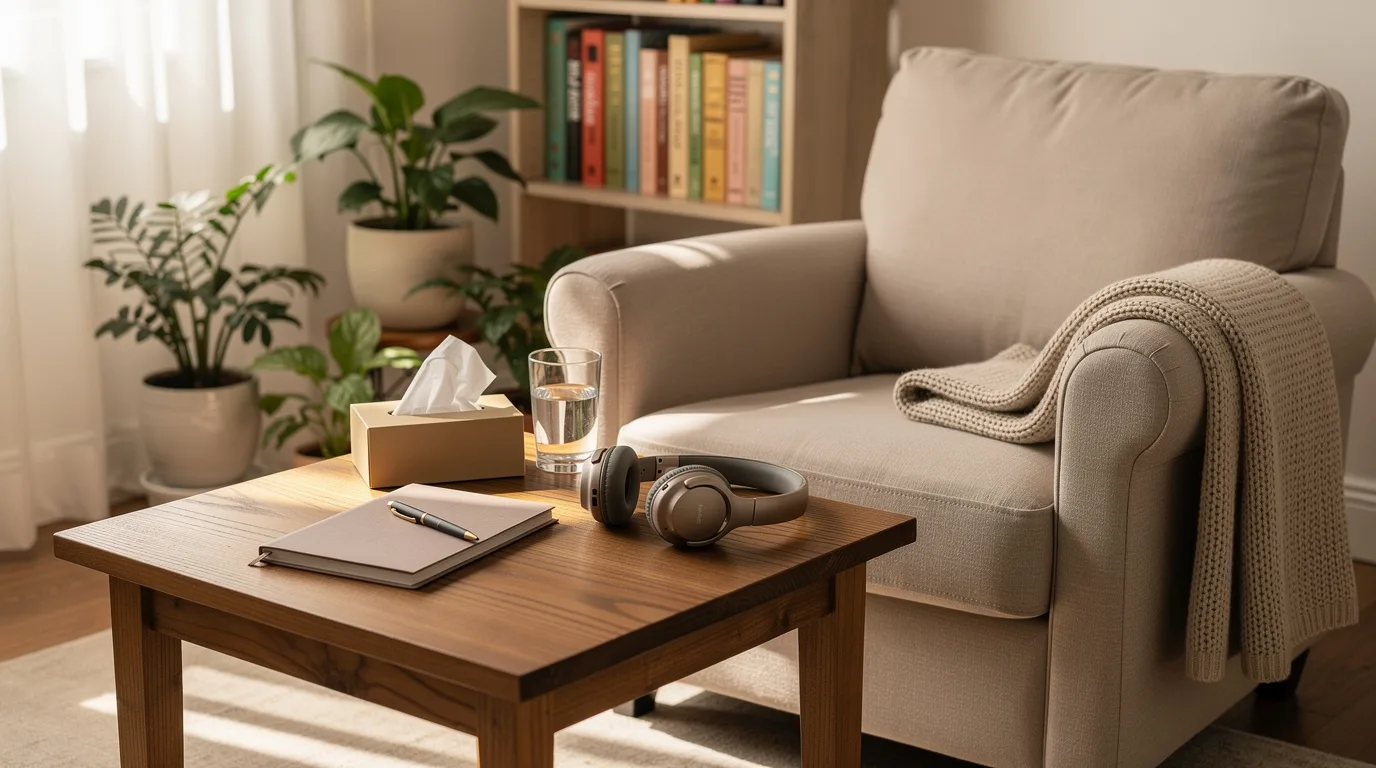
Start with the seating. Choose a plush sofa or cozy armchair that lets your child sink in and feel securely held. This stable base lets them relax without fidgeting, offering a true sense of personal retreat. Consider adding soft seating options like a bean bag or floor cushions for flexible, comfortable rest. Surround it with items that comfort and engage the senses freely.
- A soft, weighted blanket or plush throw for tactile warmth and security.
- A basket of quiet fidgets and a favorite stuffed animal for silent, focused handling.
- A small side table holding their current book and a simple, calming sensory bottle.
- A natural fiber rug underfoot to define the space and add layered softness.
- A tray with a water bottle and a coaster to keep essentials neatly contained.
Create a DIY Glitter Jar for Focus
Whip up a simple glitter jar, and you’ll give your child a powerful tool for focus. Start with a clean, smooth-sided jar. Select a plastic bottle to avoid breakage and ensure safety. Add a mix of fine and chunky glitter, about half an inch deep. Use a funnel for precision. Fill the jar three-quarters with warm water, then add clear glue—about 20% glue to 80% water. Stir well to dissolve. For slower, more mesmerizing falls, add a bit of glycerin. Shake it to watch the chaos swirl, then set it down and breathe together as it settles. Seal the lid tightly with strong glue. It’s a visual anchor, representing a mind calming from chaos to clarity, perfect for their quiet corner.
Stock Calming Activities and Tools
To create a truly effective calming space, you’ll want to stock it with a variety of tools that cater to your child’s unique sensory preferences. Offering choices empowers them to select what works, promoting autonomy. Focus on including tools that address tactile, auditory, visual, and seating needs for a holistic approach.
- Fidget tools: stress balls or squishy toys for tactile input and pressure release
- Seating: beanbag chairs or floor pillows for plush, comfortable lounging
- Audio: noise-canceling headphones or sound machines to block or mask overwhelming noises
- Visual: emotion charts or nature landscapes to aid in feeling identification and grounding
- Tactile activities: playdough or coloring sheets for mindful, expressive engagement
These items collectively support sensory regulation, which is key for learning and social participation. This selection ensures your child has the freedom to easily create a personalized calming experience.
Practice Simple Breathing and Stretches
Alongside those tangible tools, your child’s own breath becomes a powerful, portable resource for finding calm. Guide them to practice simple techniques like cyclic sighing—a deep inhale through the nose, a short second sip of air, and a long, slow exhale through the mouth. This can quickly reduce stress and sharpen focus.
Introduce gentle stretches, like reaching for the sky or rolling the shoulders, to release physical tension. Pairing a few mindful breaths with movement helps settle their nervous system. These practices aren’t just calming in the moment; they build a lifelong skill for self-regulation and can even promote more restful sleep later.
Set Clear Rules for Corner Time
Before introducing quiet corner time, you’ll create a safe, predictable space by setting clear, consistent rules. This framework gives your child the freedom to explore calm independently, knowing exactly what’s expected.
- You’ll define a specific, consistent location, like their bedroom, as the designated quiet space.
- Sessions will last a set duration, starting with 10-15 minutes and gradually building toward longer periods.
- Your child will stay in the corner for the entire time, engaging in quiet activities like reading or solitary play.
- You’ll use a visual timer or calming music to signal the start and end, making transitions predictable.
- You’ll consistently enforce the rules, framing the time as a positive, helpful practice, never a punishment.
Adapt the Space for Any Age
Whether your child is a toddler or a teenager, you’ll want to tailor the quiet corner to fit their changing needs and preferences. Start with a flexible foundation like floor cushions, plush mats, or a simple couch cushion that works for everyone. As they grow, you can introduce ergonomic seating for teens and adults to support longer sessions.
Swap sensory elements based on age: keep plush toys and tactile bottles for little ones, and add kinetic sand or quiet fidget tools for older users. Maintain a calming, nature-inspired visual theme with soft lighting that appeals to all. Let them personalize the space with their own art or decor, ensuring it always feels uniquely theirs. The key is to adapt elements freely as their need for comfort and independence evolves.
Conclusion
You’re not just setting up a corner; you’re crafting a sanctuary of calm that symbolizes peace in your bustling home. Here, your child’s imagination and emotions can breathe. Stock it with soothing decor, flexible seating, and calming tools—set clear rules. This space adapts for any age, offering a practical, empathetic refuge. It nurtures young hearts, helping them find quiet strength and resilience daily.


I don’t think the title of your article matches the content lol. Just kidding, mainly because I had some doubts after reading the article. https://www.binance.com/register?ref=W49FLGDN