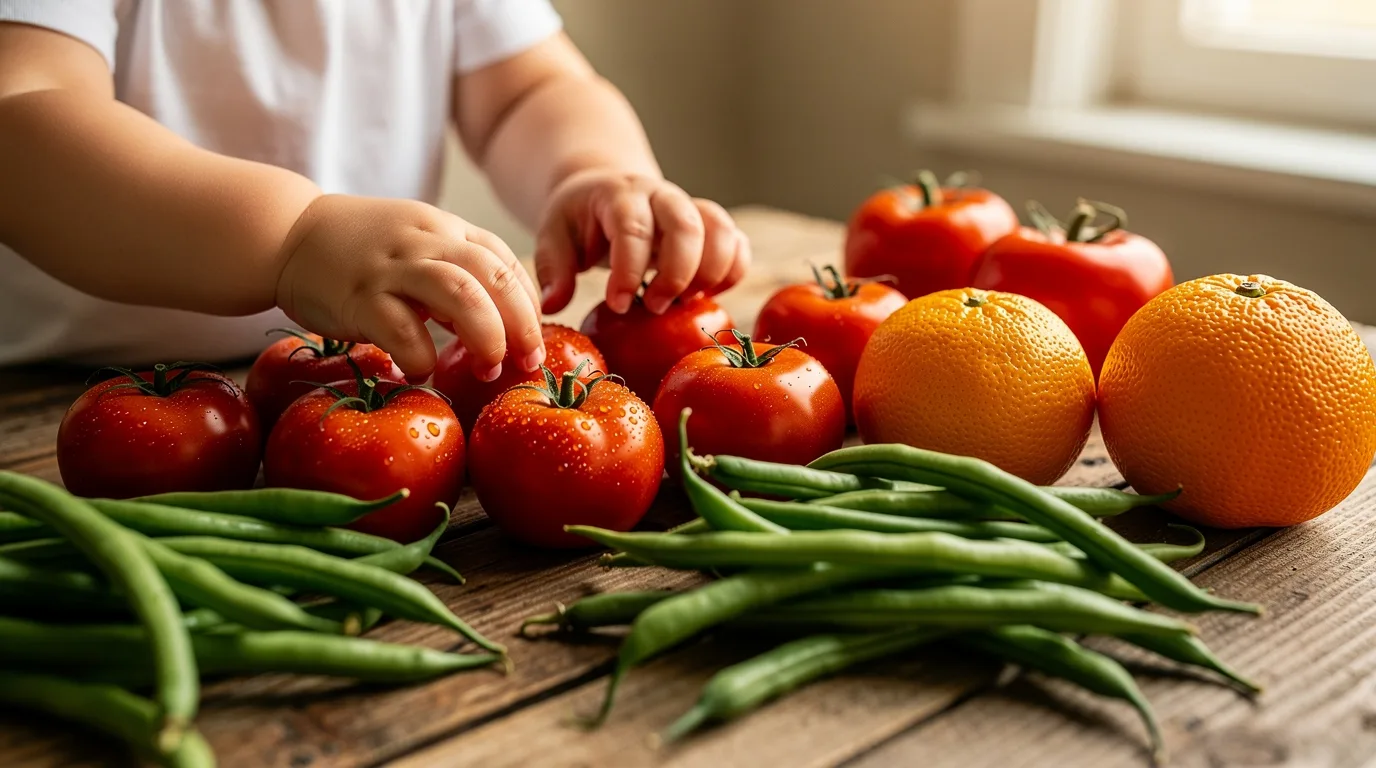
For your baby under 1, use oversized, chew-safe pom poms or fabric scraps. At age 1, try taste-safe fillers like cooked oatmeal or colored rice. Toddlers (2-3) can explore kinetic sand, while preschoolers (3-5) enjoy themed bins with grains and letters. School-age kids (6+) benefit from tweezers in rice for fine motor work, and older children can tackle STEM challenges with construction-themed setups. Always supervise closely, and you’ll find even more tailored ideas ahead.
Key Takeaways
- Always supervise sensory play, especially for children under 3, to ensure safety with fillers and tools.
- Infants under 1 year require oversized, non-toxic fillers like large pom poms to prevent choking hazards.
- For 1-year-olds, opt for taste-safe materials such as cooked pasta or edible play clay under close supervision.
- Toddlers and preschoolers (2–5) can use varied textures and tools like funnels and tongs to develop fine motor skills.
- School-age children (6+) benefit from STEM-focused bins with academic themes and small tools for enhanced learning.
Sensory Bins 101: Core Benefits and Safe Setup
Dive into sensory bins and you’ll discover a powerful tool for your child’s early years. They significantly boost sustained attention and help ease anxiety, promoting better emotional regulation. You’ll watch your child’s fine motor skills flourish as they scoop, pour, and mold, while their cognitive growth sparks through problem-solving and memory games. Additionally, sensory bins foster social skills such as joint attention and collaboration during play.
For safe setup, wait until they’re over 18 months. Equip them with oversized tweezers, funnels, and measuring cups to practice grasping and understand concepts like volume. Always supervise to ensure a playful pace. Narrate their actions to build vocabulary and teach cause and effect, giving them the freedom to explore and learn at their own rhythm.
Baby-Safe Fillers for Infants Under 1 Year
Always prioritize safety by selecting non-toxic fillers too large to swallow, like oversized pom poms or soft fabric scraps. You must ensure that every item is size-appropriate and cannot pose a choking hazard. This type of play builds neural connections that support memory and problem-solving. Avoid small objects that fit in the mouth and exclude water beads due to expansion risks. Select fillers with varied textures, such as smooth, rough, or crinkly, to enhance your infant’s tactile experiences. Never leave your baby unsupervised during sensory play; always stay within arm’s reach.
- Extra-large pasta shells: they are chew-safe and offer interesting shapes for exploration
- Large tactile balls: designed for mouthing and grasping to develop motor skills
- Soft fabric scraps: introduce a range of textures through gentle touch
- Cotton balls: provide fluffy, lightweight sensory stimulation that is non-toxic
You empower your child’s curiosity by creating a secure environment where they can explore freely. Choose non-food options to prevent allergic reactions, and regularly check fillers for safety. Enjoy watching your infant discover new sensations while you ensure their well-being.
Taste-Safe Ideas for 1-Year-Old Explorers
As your child turns one and begins mouthing everything with even more determination, you can introduce taste-safe fillers that bridge the gap between strict baby-proofing and broader sensory exploration. You’ll want materials that are non-toxic and too large to choke on. Cooked oatmeal or large pasta shells offer a soft, familiar texture. Create edible, colorful sensory bases by dyeing rice with food coloring and vinegar, then air-drying it. Whip chickpea liquid into a vibrant, taste-safe foam. For varied sensations, use chilled peas or a simple, gluten-free play clay made from cornstarch and water. Always supervise closely, ensure all items are allergen-free for your child, and maintain clean hands and materials before and after play, as popular water beads pose a severe expansion, obstruction, and toxicity risk and are not safe for any age.
Toddler Sensory Bins for Ages 2 to 3
Moving into the toddler years, you can expand sensory play with more complex fillers and tools that match their growing skills and curiosity. You’ll strengthen their fine motor skills and hand-eye coordination using tools like tongs and funnels for scooping and transferring materials. Open-ended play with these bins actively promotes problem-solving and brain development. Modeling interactions and practicing phrases also supports turn-taking and social skills.
- Use kinetic sand or oobleck with small molds and vehicles for creative, tactile exploration.
- Introduce simple tools like scoops, funnels, and small bowls to practice pouring and measuring.
- Set up a contained water play station in a cookie sheet with colored water, pom poms, and droppers.
- Create a rainbow rice bin in a dry bathtub for easy cleanup while they practice transferring.
This hands-on learning directly supports their growing independence and cognitive growth.
Preschool Play: Bins for Ages 3 to 5
While toddlers thrive with simple scooping and pouring, preschoolers are ready for bins that expand their creativity, introduce early science concepts, and build literacy. You can fill bins with kinetic sand for molding, or create oobleck to explore non-Newtonian fluids. Introduce early literacy with alphabet flower elements or carrot bins holding letter tiles. Encourage scientific inquiry with a frog pond bin for life cycles, or rainbow bins for color sorting. Add tools like funnels and Safari Ltd toobs, and let your child’s imagination guide the play. Incorporating grains and small solids like rice or beans adds varied auditory feedback and fine motor challenges. These setups support extended, focused engagement, turning sensory exploration into foundational learning.
Fidget Focus: Bins for School-Age Kids 6-8
When your child reaches school age, sensory bins can evolve into focused fidget tools that build fine motor control and academic skills. You can design bins that challenge their growing abilities while supporting what they learn in school. Use tweezers with colored rice for pincer practice or create a sight word dig with letter rocks in beans. These activities enhance focus and hand strength through playful exploration. Always lay out a protective covering first to simplify cleanup.
- Sight Word Dig: Bury letter rocks in beans for spelling practice with scoopers.
- Salt Tray Writing: Trace letters in salt with an unsharpened pencil for rainbow letter formation.
- Number Pond: Use number lily pads in a water base to practice counting with frog toys.
- Farm Sorting: Sort animal figures in a corn pit to explore habitats and categories.
Advanced STEM Bins for Big Kids 9 and Older
Elevate their sensory play into complex STEM projects that challenge their growing intellect and dexterity.
You can integrate advanced physics and engineering principles directly into their bin. Try a construction site bin with shredded paper, brown playdough, and small vehicles to foster design and scenario-building. A floating and sinking experiment in water teaches hypothesis testing and density concepts visually. Incorporate tools like tweezers and tongs to intensify fine motor practice as they manipulate small objects. These are especially recommended for providing a fine motor challenge for older children.
These hands-on explorations build critical thinking and problem-solving skills without worksheets. They’ll practice grasping, balancing, and core stabilization through scooping, pouring, and sustained play. Themed bins, like a dinosaur dig with natural elements, support cognitive growth and imaginative play while solidifying academic concepts in measurement and vocabulary through direct, sensory application.
Conclusion
You’ll overcome the guesswork with this age-by-age visual map. From baby-safe beans to advanced STEM setups, you now have a clear guide to match fillers to development. You can confidently create bins that are safe, engaging, and perfectly suited for every stage from infant to big kid.