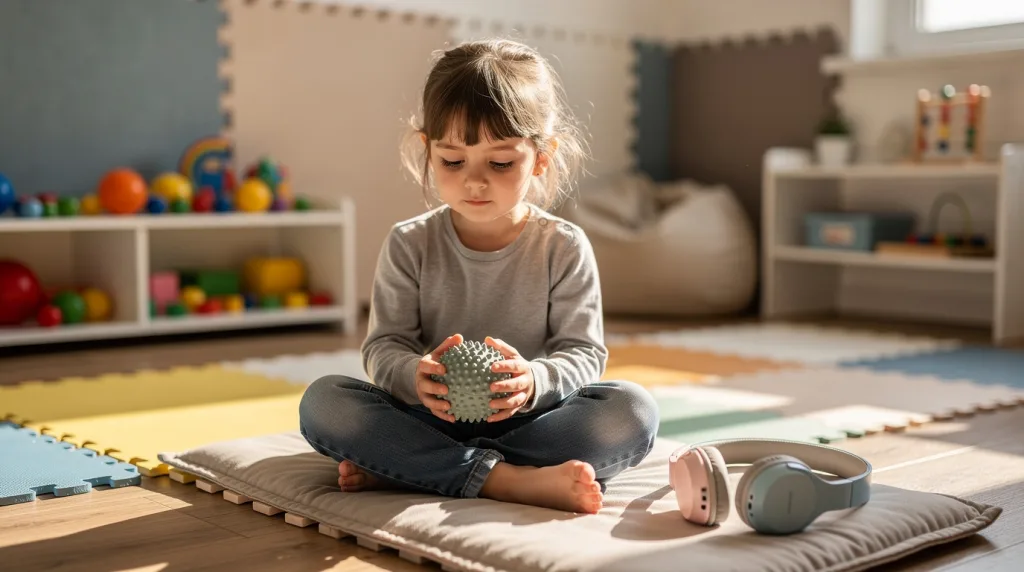
You can help your child manage noise sensitivity by creating a quiet sensory corner with sound-absorbing materials and noise-canceling headphones for overwhelming places like cafeterias. Build tolerance gradually through play by introducing soft sounds and using a visual schedule to prepare for noisy events. Keep a portable sensory kit with fidgets and chew tools for immediate regulation. These foundational steps pave the way for exploring additional strategies to support their comfort and confidence.
Key Takeaways
- Create a quiet sensory corner at home with acoustic panels, soft furnishings, and noise-canceling headphones for a predictable sanctuary.
- Use a visual schedule with pictures to prepare a child for noisy events like assemblies or cafeteria transitions.
- Employ noise-canceling headphones or earmuffs during outings to loud places like playgrounds or cafeterias for immediate relief.
- Incorporate “heavy work” activities like vacuuming, carrying laundry, or climbing to provide calming proprioceptive input.
- Use deep pressure techniques such as squeezes between pillows or bear hugs to promote quick relaxation and sensory regulation.
What Noise Sensitivity in Autism Really Looks Like
While many children might shrug off a crowded cafeteria or a fire alarm, for a significant portion of autistic kids, these everyday sounds aren’t just annoying—they’re overwhelming or even painful. You might see them cover their ears, flee a room, or become intensely agitated. This isn’t a behavioral choice; it’s a neurological reality. Studies show 50 to 70 percent of autistic individuals experience this hypersensitivity. Their brains may not filter sound like yours, leading to heightened arousal and an urgent need to escape the sensory onslaught. This isn’t about preference; it’s about a fundamental difference in how their nervous systems process the world, often triggering fight-or-flight responses to what you perceive as normal noise. This observation dates back to early clinical descriptions, including a 1943 article that noted unusual relationships to sound in autistic children.
How to Create a Sound-Proof Sensory Corner
For a child overwhelmed by everyday noise, creating a dedicated sensory corner offers a crucial retreat. Begin by selecting a secluded location, like a closet or quiet room corner, away from foot traffic. Install acoustic foam panels on the walls and ceiling to absorb echoing sounds. Seal gaps under doors with sweeps to block external noise, and add a thick carpet or cushioned flooring to dampen vibrations. For a more defined and flexible space, consider using acoustic partitions to create a customizable quiet zone within the room.
Enhance this foundation with noise-canceling headphones and a sound machine for steady, calming audio. Use heavy curtains and soft furnishings to further absorb sound, crafting a predictable, controllable sanctuary where your child can freely decompress and regain sensory balance.
Building Sound Tolerance Gradually With Play
Turning everyday play into a bridge toward sound tolerance gives your child a low-pressure way to face triggering noises. Start by embedding a soft, enjoyable sound into a favorite game, pairing it with positive reinforcement like praise. Use a visual schedule to prepare them, and practice calming breaths during the activity. This supports gradual exposure in a controlled setting. As their confidence grows, very gradually increase the sound’s volume or introduce a mildly bothersome noise at a low level during play. Consistently assess their comfort and adjust the routine, always prioritizing their sense of control. This gradual, play-based desensitization reduces anxiety and builds lasting self-regulation skills.
Top Noise-Canceling Headphones for Kids
Choosing the right noise-canceling headphones for your child means prioritizing both effective sound reduction and essential safety features. For active noise cancellation (ANC), the Puro Sound Labs Puro Quiet Plus offers a premium, volume-limited option. The budget-friendly iClever HS24 provides strong ANC for loud environments like travel, with great connectivity. For durable passive isolation, the iClever BTH26 is a robust choice with exceptional battery life, perfect for daily activities and flights. Noise-reducing designs are particularly beneficial for children with sensory sensitivities. All top models cap volume at 85 dB to protect hearing. Consider the need for ANC versus isolation, battery longevity, and a comfortable, adjustable fit. The right pair gives your child the freedom to engage with the world on their own terms, managing sensory input confidently.
Using Preferred Music as a Sound Buffer
Dialing in a favorite playlist can transform unpredictable noise into a predictable auditory backdrop for your child. This familiar soundscape acts as a buffer, smoothing out disruptive noises and creating a concentration sanctuary. Preferred music enhances focus, increasing on-task states and reducing mind-wandering, which gives your child the freedom to engage more deeply in activities like building or reading.
To maximize this, choose lyric-free tracks in styles like classical or jazz to prevent sing-along distractions. This is especially important during language tasks to avoid competing words that can hinder concentration. This active engagement with music not only supports attention but also aids emotional regulation, lowering stress. By letting your child select their soundtrack, you empower them to create their own optimal auditory environment for calm and focus.
White Noise vs. Pink Noise: Which Calms Best?
While both can mask disruptive sounds, their distinct sound profiles create different calming effects for your child. You can choose based on your child’s sensory preference and your family’s needs.
- White noise offers a consistent, sharp static that effectively blocks sudden, jarring noises, which can be ideal for creating a focused study bubble or promoting longer sleep duration.
- Pink noise provides a softer, more natural soundscape like steady rain or rustling leaves, which may feel gentler and support deeper sleep cycles and next-day memory retention.
- For children with ADHD symptoms, both noises can offer a small but significant boost in task performance, giving you a practical, low-risk tool to support their focus. This aligns with a recent meta-analysis finding a small but statistically significant benefit for children and young adults with ADHD.
Heavy Work Activities for Quick Sensory Calm
When your child feels overwhelmed or unfocused, heavy work activities provide deep pressure to the nervous system for quick, effective calming. These tasks engage muscles and joints, using resistance to organize the body and mind. You can integrate them flexibly into daily life for immediate regulation. Additionally, regular heavy work can reduce the need for unsafe input-seeking behaviors like crashing into furniture.
Try playground actions like climbing, monkey bars, or jumping on a tricycle. At home, involve them in vacuuming, stirring thick batter, or carrying laundry baskets. These activities deliver powerful proprioceptive input that improves focus and body awareness. For consistent calm, schedule them into a sensory diet—before school for readiness or after to unwind. This approach empowers you to provide functional, soothing input that fits your family’s rhythm.
Deep Pressure Techniques for Immediate Relief
Often, the most immediate way to help a child regain calm is through deep pressure techniques, which trigger a cascade of neurochemicals like serotonin to naturally balance the nervous system and reduce sensory overload. This proprioceptive input in autism is often craved. This promotes relaxation, focus, and happiness by stimulating deeper skin receptors. You can use these methods proactively to prevent meltdowns.
For immediate relief, consider these techniques:
- Bear Hugs: Provide firm, whole-body pressure that offers security, calms the nervous system, and boosts serotonin.
- Pillow Squeeze: Place your child between pillows for comforting compression that reduces anxiety.
- Joint Compressions: Apply quick, gentle squeezes to arms and legs for sensory organization and improved focus.
These techniques can be used anytime, anywhere, providing quick sensory input to restore calm. Consistent use improves emotion regulation and sleep quality, empowering your child to navigate noisy environments with greater ease and freedom.
Oral Motor Supports Like Chew Tools
Building on the calming benefits of deep pressure, you can also address your child’s sensory needs through their mouth with oral motor supports like chew tools. These tools provide essential proprioceptive input, which can significantly improve focus and reduce anxiety during overwhelming moments. The jaw muscles are among the strongest in the body, and their activation during chewing provides robust proprioceptive feedback that supports calming. By meeting your child’s oral sensory needs, you help them organize incoming information and filter out excessive noise.
Options range from durable chew sticks for aggressive chewers to vibrating tools for targeted muscle stimulation. You can find wearable or discreet pencil toppers for school use, allowing your child to self-regulate freely. Always direct chewing to these safe alternatives to support their sensory regulation and overall well-being.
DIY Fidget Tools for Auditory Focus
Sometimes, you can help your child maintain auditory focus by creating simple DIY fidget tools. These occupy the brain’s sensory pathways, reducing distraction from background noise and improving listening. Evidence shows they can boost academic scores, especially for children with ADHD, by providing the right input to filter distractions. The repetitive motion of using them can act as a meditative activity to soothe the nervous system.
You can craft quiet, effective options together:
- Squeeze balls from balloons filled with flour or rice for silent tactile compression.
- Textured stickers on pencils or desks for subtle, non-disruptive feedback.
- Bendable sticks from pipe cleaners for malleable, visual manipulation.
Remember to use them discreetly in a “fidget zone” below the desk. Rotate tools to maintain their effectiveness for your child’s unique sensory needs.
Visual Schedules for Noisy School Events
While DIY fidgets offer hands-on help for filtering noise, unpredictable loud events like assemblies or fire drills can still overwhelm your child. Visual schedules provide a clear, predictable roadmap, reducing anxiety by showing exactly what comes next. You can create these using simple pictures or symbols for each step, from entering the gym to sitting and listening. Adding a 5-minute warning timer before a noisy transition helps your child prepare mentally.
This structure empowers your child to navigate chaotic events more independently, minimizing meltdowns and improving focus. By involving them in choosing the icons, you foster ownership and engagement, turning overwhelming experiences into manageable sequences.
Structuring Effective Sensory Breaks at School
Often, the constant hum of a classroom can escalate into an overwhelming obstacle for a noise-sensitive child, fracturing focus and draining energy. You can validate this need for quiet by integrating structured sensory breaks. These proactive pauses, supported by research, empower students to self-regulate before reaching overload, directly improving on-task behavior and academic engagement.
- Schedule Proactively: Implement breaks as a regular, predictable part of the day, not just a reaction to distress. This provides essential freedom to reset.
- Create a Quiet Zone: Designate a space with sound-absorbing materials that meets recommended noise levels, offering a genuine escape from auditory chaos.
- Equip with Tools: Provide noise-cancelling headphones or quiet activities, allowing the child to control their sensory input and return to learning refreshed.
Managing Noise Sensitivity in Canteens
If the school cafeteria feels like an assault of clattering trays and echoing voices for your child, you’re not alone in seeking solutions. You can empower them with ear defenders or noise-cancelling headphones to control their auditory input. Request a designated quiet area or sensory-friendly table to provide a lower-stimulus zone for eating. These environmental modifications are key to their comfort.
Collaborate with the school on seating arrangements. Preferential seating at the end of a row minimizes exposure to chaotic cross-table noise. Use visual schedules to prepare them for the transition, and explore flexible seating options like wiggle cushions to address broader sensory needs, granting them greater freedom to self-regulate during meals.
Handling Sudden Noise on the Playground
As your child navigates the lively chaos of the playground, sudden noises like a shriek or a clanging swing chain can trigger a pronounced stress response. This can alter their heart rate and disrupt their focus, vital for free play. You can empower them with practical strategies to manage these auditory surprises and maintain their enjoyment.
- Equip them with discreet noise-reducing options like child-sized earmuffs or headphones to muffle hyper-reactivity without removing them from the fun.
- Scout the playground together to identify and create a known “quiet zone” they can retreat to if sounds become overwhelming, granting them control.
- Practice by previewing potential loud noises before visiting, preparing their nervous system and minimizing distress when the unexpected occurs.
Building an Emergency Sensory Kit for Outings
Pack a portable sensory kit tailored to your child’s needs so you’re prepared for overwhelming environments like crowded stores, noisy restaurants, or unfamiliar family gatherings. Choose a colorful, durable backpack that appeals to your child. Include noise-canceling headphones or earmuffs to block overwhelming sounds, and add favorite music or audio stories on your mobile device. For tactile comfort, pack stress balls, fidget toys, or a weighted lap pad. Visual aids like glitter calm-down bottles or sunglasses can help organize senses. Olfactory items such as scented lotion or familiar toiletries ease transitions. Add chewy snacks for oral input and a timer for predictability. This kit empowers your child to self-soothe, granting independence to handle sensory challenges and enjoy outings freely, with tools for every sense.
Conclusion
Remember, your child’s comfort is the key to their world. By building sensory corners, using headphones, and planning for outings, you’re not just managing noise—you’re giving them tools to thrive. Keep practicing gradual exposure, lean on preferred music, and always have that emergency kit ready. You’ve got this, and their confidence will grow with every quiet victory.