
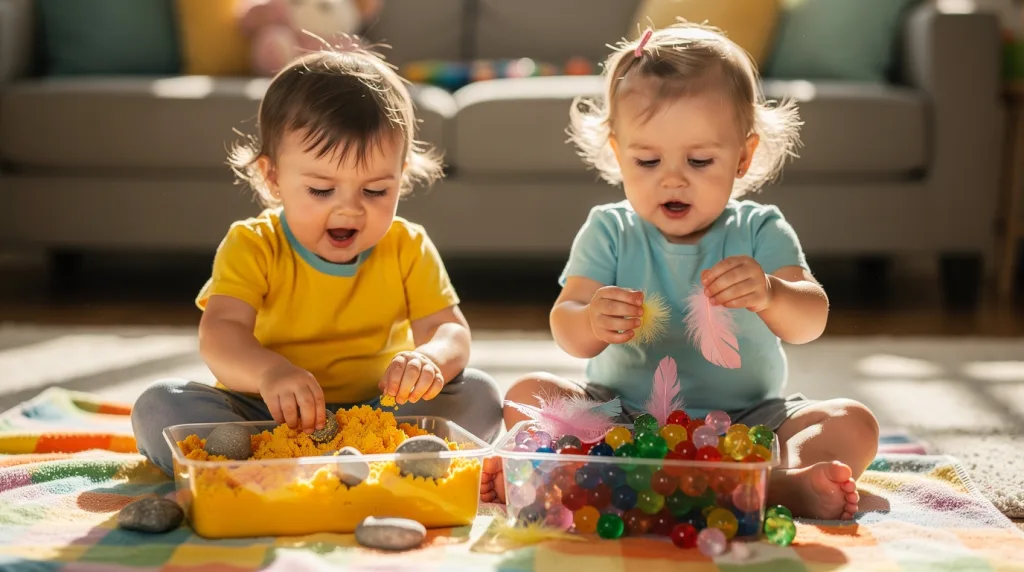
You can create engaging sensory play for your twins using simple pantry items and mindful setups. Try tactile bins with dry rice or cooked spaghetti for scooping, hiding treasures, and squishing—this builds hand strength and lets each twin explore at their own pace. Set up water play with sponges and colored ice cubes for cooperative splash time. Adapt activities to their stage, and you’ll nurture their bond while supporting crucial developmental skills. Discover how structured routines and a dedicated sensory space can make these moments even more rewarding.
Key Takeaways
- Sensory play has no right or wrong method, making activities naturally inclusive for both twins to explore together.
- Set up side-by-side tactile bins with safe fillers like rice or water beads for shared discovery and communication.
- Create adapted sensory spaces with calming and active zones to support independent or cooperative play for twins.
- Use pantry staples like dry rice, pasta, and homemade dough for easy, engaging tactile bin activities.
- Schedule sensory play to support regulation and skill-building while reducing caregiver burden through focused observation.
What Is Sensory Play and Why Twins Thrive on It
When you watch twins engage with a simple bin of rice or a tray of water, you’re observing sensory play in action—a foundational, hands-on exploration that engages all their senses. This play stimulates touch, sight, and sound, while also developing body awareness and balance. For infants, this type of play directly bridges neural pathways in the developing brain. There’s no right or wrong way to do it, making it a perfect, inclusive activity for your duo.
For twins, this shared exploration is powerful. They build crucial brain connections together, processing new textures and sounds. This side-by-side discovery naturally boosts their problem-solving, language, and fine motor skills as they learn from the same rich experiences, fostering both individual growth and a unique bond.
Setting up a Twin-Proof Sensory Space
Creating a dedicated sensory space for twins doesn’t require a playroom overhaul; often, a closet, corner, or underused nook becomes the ideal, contained zone. This approach is rooted in the principles of Snoezelen rooms, which were designed to promote sensory enjoyment in a calm atmosphere.
Start by mapping hybrid zones—one active, one calming—so your twins access different sensory inputs without colliding. Position trampolines and crash pads on one side while reserving a pillow-filled tent with weighted blankets nearby for decompression. Secure wall-mounted textures, mirrors, and fairy lights with brackets so nothing topples during enthusiastic play.
You’ll want open floor space between stations for free movement. Use soft, low-wattage lighting or bubble tubes to avoid overstimulation, though glow-in-the-dark bins under black lights offer exciting neon alternatives when energy runs high.
Layer sensory bins with rice, water beads, and textured fabrics at child height. Textured walls, yoga mats, and body socks invite tactile exploration independently. Always anchor everything—your twins’ safety and autonomy matter equally.
Sensational Water Play for Two
Inevitably, water becomes a captivating shared medium where your twins can explore side-by-side, often learning more from observing each other’s discoveries than from the initial splash itself. Set up a simple sink-or-float station with toys and natural items like leaves and rocks; they’ll test buoyancy and cheer each other’s guesses. Introduce colored ice cubes to a water bin, watching them melt and merge colors while discussing cold and slippery textures. Remember to prepare ice cubes colored with food coloring ahead of time. Provide sponges, droppers, and funnels for transferring water, strengthening coordination through shared play. Finally, head outside for cooperative games like tossing water balloons or painting the pavement with water, turning simple hydration into a world of shared wonder.
Pantry Staples for Instant Sensory Play
Since you’ve already got what you need hiding in your kitchen cabinets, pantry staples offer the fastest route to engaging sensory play without an extra trip to the store. You can transform everyday ingredients into captivating sensory stations that keep both twins happily occupied. Pour uncooked rice into containers for scooping, or hide small toys for treasure hunts. Cook up colorful spaghetti for squishy tactile exploration. Mix flour and water into moldable dough perfect for little hands. Uncooked tube-style pasta is also fantastic for threading practice with string or pipe cleaners. Here’s what makes these materials special:
- Oobleck from cornstarch and water oozes, drips, and solidifies under pressure, fascinating both kids
- Dry oats deliver unique texture and affordable, easy-to-clean textural variety
- Rainbow-colored pasta doubles as fine motor threading practice
You’ll love how simple ingredients grant your twins freedom to explore independently with minimal supervision.
Outdoor Sensory Exploration for Twins
Stepping outside with your twins opens up a world where every texture, sound, and movement becomes a shared discovery. Let them manipulate rocks and dig in dirt for rich tactile input. Encourage barefoot walks on grass, sand, and gravel to awaken their senses. They can roll down a grassy slope to stimulate their vestibular system or balance on a log for proprioceptive feedback. Host listening walks to identify bird songs, and create nature scavenger hunts for visual exploration. Additionally, searching for natural scents like flowers and pine needles enhances their sense of smell and builds descriptive language. Set up simple water and sand stations for pouring and splashing. These unstructured, outdoor adventures provide the heavy work and varied sensory input they crave, fostering development through freedom and play.
Tweaking Play for Your Twin’s Stage
While every twin pair develops at their own pace, you’ll find their play naturally evolves through recognizable stages, and you can gently guide their shared sensory experiences to match. These early experiences are foundational as sensory play supports cognitive growth.
- For your infants, engage their senses with high-contrast visuals and textured grasping toys during tummy time, fostering their early connections.
- As they become toddlers, introduce cause-and-effect toys and safe climbing structures, celebrating their growing mobility and parallel play.
- For your two-year-olds, encourage simple pretend play and interactive games that use emerging words like “me” and “mine,” supporting their social and language leaps.
You can honor their individual timelines by observing and adapting, offering the right sensory input that meets them where they are today.
Handling Mess & Conflict
Although sensory play with twins inevitably involves mess and occasional conflicts, you can strategically manage both through containment, clear expectations, and focusing on the substantial developmental benefits. You’ll minimize scatter by starting with thin material layers in nested bins or by taking play outside. Contain explorations using sensory bags or defined spaces with large, non-chippable items. For conflicts, establish clear when-then rules for continued access and if-then warnings for dumping, while also accepting spills as part of learning. This controlled freedom lets them practice self-advocacy and problem-solving. Research indicates that having control over sensory experiences can improve attention and reduce repetitive behaviors. Remember, the immersive, tactile experience is crucial for their neural development, emotional regulation, and fine motor skills, making the manageable mess profoundly worthwhile.
Building a Daily Sensory Rhythm
Once you establish a predictable daily rhythm, you create a foundation that naturally integrates sensory exploration for your twins. You can weave sensory moments into their existing routine, using their natural alert periods for engagement and quieter times for calming input.
- Anchor a brief, sensory-rich activity like a textured mat or water play during their morning free play slot.
- Leverage the post-nap window for gentle, re-orienting play with soft lights and soothing sounds to ease the transition. This period of calm is especially valuable as consistency in maintaining nap/quiet time is crucial for their regulation, even during common nap strikes.
- Incorporate a calming, tactile ritual like a lotion massage into the evening wind-down to signal bedtime.
This structure gives you the freedom to be present, as the schedule handles the “when,” letting you focus on the “how” of their exploration.
Tactile Bins for Side-by-Side Play
Set up a tactile bin, and you’ve created a versatile station for your twins to explore side-by-side. You’ll foster self-regulation as the tactile input calms their nervous systems, while scooping and pouring builds crucial hand strength. Let them dig for hidden treasures; this simple act improves coordination and sustained attention.
Choose your fillers—dry rice, sand, or water beads—to safely engage their senses and gradually build tolerance. They’ll practice cognitive skills by sorting objects and expanding their vocabulary as they describe their finds. This shared space naturally encourages turn-taking and communication, giving them the freedom to explore independently or cooperatively, all while developing at their own pace. Using heavier bin fillers can increase deep pressure and provide more proprioceptive input for enhanced body awareness.
Conclusion
You’ve now got everything you need to make sensory play a joyful, developmental cornerstone for your twins. Remember, during early childhood, the brain forms over one million new neural connections each second—and shared sensory experiences powerfully shape this growth. By embracing these ideas, you’re not just managing playtime; you’re actively building their cognitive and emotional foundations, side by side. Keep it simple, follow their lead, and watch them thrive together.



Your article helped me a lot, is there any more related content? Thanks!